
- By Ash
- in Reviews

A few months ago I finally gave Warframe a try, and despite some grievances, I found myself really enjoying it. And so I kept playing... A LOT. And now, 300 hours later, the best way I can describe Warframe is a Dr. Jekyll and Mr. Hyde kind of a situation.
The things it does well are so unbelievably good that I just can't stop playing. I'll finish a mission and then immediately queue up another one. It's like instinct at this point. But at the same time, there's a bunch of awesome-looking stuff in here that is so poorly implemented that I'm genuinely confused how it all came from the same team.
So join me in this retrospective as I show you where Warframe excels, where it kinda muddies the water, and where it straight up falls flat on its face.
- By Ash
- in Reviews

I've always found the Mount & Blade series pretty intimidating, so it's only recently that I finally gave Mount & Blade 2 a proper shot. And now, about 300 hours deep, I must admit I feel like a right dingus for not diving in earlier.
So if you're in the same boat, or if you have no idea what the hell Mount & Blade 2 is even supposed to be, let me show you what exactly makes it so special, why it'll get you addicted to axes, and whether it's the kind of game you'd actually enjoy.
- By Ash
- in Reviews
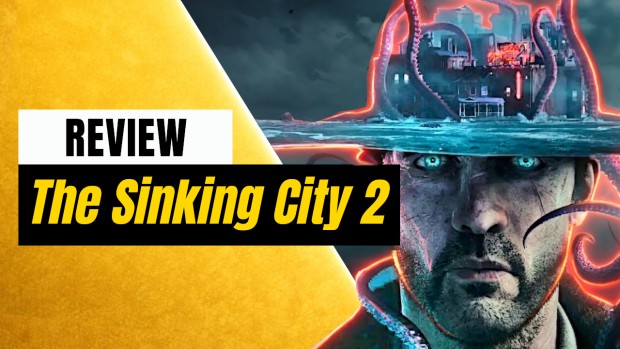
It doesn't matter if we're talking about movies or games, sequels tend to follow one simple rule: bigger is better. More content, more characters, more explosions, more everything. Because if it isn't twice as big as the original, what's even the point?
But in an interesting little twist, The Sinking City 2 has decided to do the complete opposite. It's smaller, shorter, and far more linear than its predecessor... yet also massively better. Because while the original tried to be an open-world game, a detective game and a survival-horror all at the same time, the sequel has just slammed its chips on the table and gone all in on survival-horror - and in a direction I, honestly, never could've expected.
- By Ash
- in Reviews
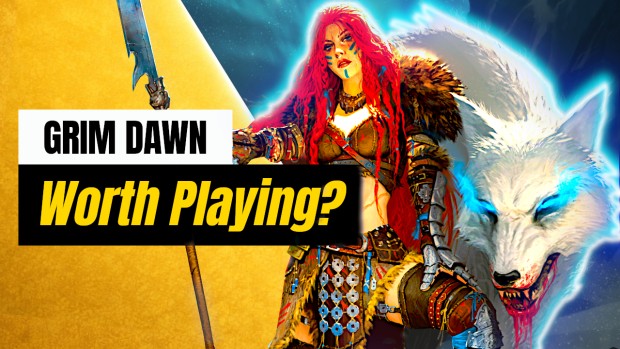
Grim Dawn has been around for over a decade. It's one of the most beloved ARPGs out there, and somehow... I've never played it. I guess Path of Exile and Diablo just kept me occupied.
But with the launch of the Fangs of Asterkarn expansion, I finally bit the bullet and dove in. And after spending two weeks playing as a wizard-werewolf, getting showered in absurd amounts of loot and just kind of repeatedly murdered - I must admit, Grim Dawn has been one hell of a surprise!
- By Ash
- in Reviews
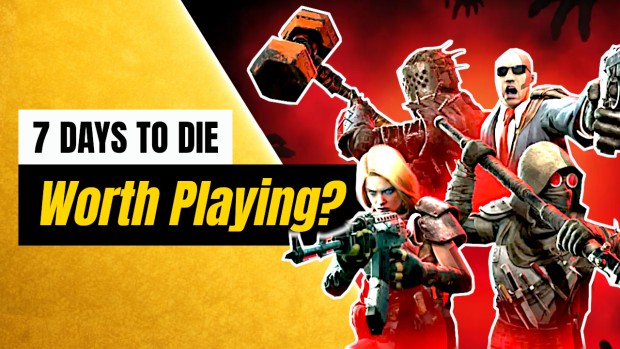
Despite always being curious about it, I must admit I was terrified of trying 7 Days to Die. Not because of spooky scary zombies, but because I've never seen a game's community this consistently angry at the people who made it.
So naturally, I always assumed the game was a complete dumpster fire. But a few weeks ago I finally bit the sham sandwich and dove in, and let me tell you - 7 Days to Die is not what I expected. Not even close.
- By Ash
- in Reviews
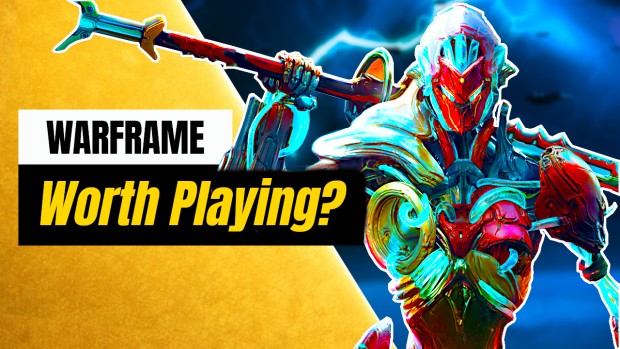
Warframe is one of the best co-op games out there, but starting it is genuinely terrifying. After thirteen years of updates, the game now has more systems and features than a jumbo jet.
But I finally gave it a try a few weeks ago, and I'll be honest - it was completely different from what I expected. So let me show you what the new player experience is like these days, where Warframe completely won me over, where it nearly lost me, and whether it's still worth jumping into today.
- By Ash
- in Reviews
CRPGs are weird. For the last twenty years, RPGs have been doing everything they can to become more approachable: less reading, fewer stats, simpler combat, less choices, and way bigger explosions.
Meanwhile CRPGs looked at that trend and just went: "Nah". Dialogue trees became forests. Character builds ballooned in complexity. And some of these games now expect you to read more than some people will in their entire life! You would think that this would completely doom the genre to irrelevance, but instead it's more popular now than it has been in decades.
And after playing through the Warhammer 40k: Dark Heresy beta, I found myself wondering why that's the case. What actually makes a great CRPG? And does all that complexity really make the games better, or have we all just Stockholm Syndrome'd ourselves into enjoying spreadsheets?
- By Ash
- in Reviews
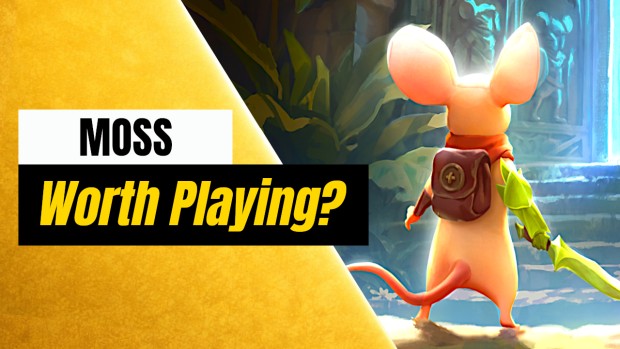
Moss: The Forgotten Relic raises a pretty interesting question: how do you make a VR game work without the VR? After all, Moss built its entire identity around you physically reaching into the world, pushing and pulling everything like a curious toddler.
So how do you make that work on a normal screen? Well, after playing through the demo a few times, it turns out the answer is "surprisingly well". Not perfectly, mind you. There are definitely some awkward bits. But it works a lot better than I expected.
But first, what even is Moss? Well, it's the stuff that grows on rocks, but also a puzzly adventure game with some light combat. It's less about hardcore platforming or controller-destroyingly difficult combat, and more about exploring a cozy fantasy world alongside Quill - a sword-wielding mouse with a remarkable talent for getting herself into trouble.
- By Ash
- in Reviews
One of Rogue Trader's biggest strengths has always been its ability to make Warhammer 40,000 feel weird and outlandish, yet also deeply personal. The Infinite Museion doubles down on that by introducing a delightfully eccentric tech-priest and sending you on the galaxy's most dangerous museum tour.
So after spending a week with the DLC, is The Infinite Museion an essential addition to Rogue Trader, or merely a pleasant diversion?
- By Ash
- in Reviews
Deep Rock Galactic is one of the greatest co-op games ever. There's nothing quite like joining a group of strangers, spewing sewage at bugs, and then leaving feeling like you've just spent an hour with old friends.
So what happens when you take that formula, crank up the pressure, add a ton of randomness, and make players compete against each other for the best loot? Well, after about 30 hours with the roguelite spin-off Rogue Core, I can tell you it makes everything more exciting, more chaotic, and occasionally a lot more frustrating. And sometimes, all three at once.