
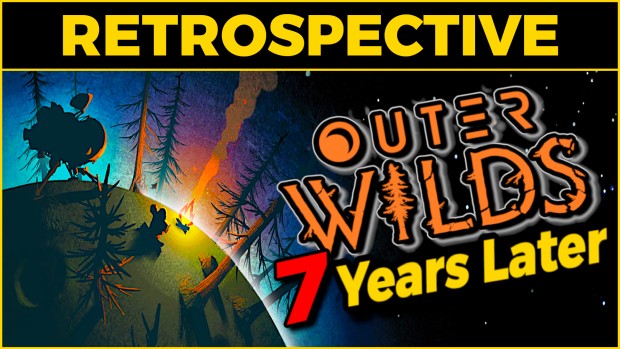
Twenty-two minutes. That's exactly how long you have before the sun goes supernova, everyone you know and love is turned into dust, and you wake up back at your campfire roasting the world's crispiest marshmallows.
In most games, falling head-first into a black hole or trying to tap-dance on a cactus would be an obvious mistake. But Outer Wilds encourages you to be curious. This is a game with no loot to find, no XP to grind, and no gear to upgrade. Your only currency is information - and your only objective is to figure out why the universe is ending before the clock hits zero again.
This focus on curiosity over stats creates a very unique form of progression. If you know exactly what to do and where, you could finish the entire game in under 10 minutes. But you don't. So instead, you're forced to step into your rickety, wooden spaceship and fly into the unknown - trying one insane idea after another just to see which ones kill you the slowest, all the while piecing together a cosmic puzzle that spans an entire solar system!
Video version of this retrospective (~11 minutes)
Whatever Floats Your Boat
The best part of this setup is that there is no 'intended' path. Take Giant's Deep: a planet that is best described as 'concentrated panic'. It's a world of massive, planet-sized hurricanes that don't just toss you around - they occasionally pick up literal islands and hurl them into space while you're standing on them.
And just to spice things up, there's a massive glowing core at the center of the planet. Since gamers share about 90% of their DNA with magpies, you're going to want to touch that shiny object. But the ocean is churning with currents so powerful they act like an actual brick wall, keeping you firmly on the surface.
At this point, you have two choices. You can spend a few loops following breadcrumbs to another planet to find the 'official' solution... or you can just sit back, observe the environment, and use your massive, galaxy-brain intellect to solve the problem right then and there.
You're never punished for being too clever or persistent. Outer Wilds is perfectly happy to let you bask in a victory you weren't 'supposed' to have yet, because it knows you're just going to get stuck on something else five minutes later. And since the world is so fascinating, you're probably going to explore it all anyway!
All of this works because the world is consistent, and the rules never change for the sake of cheap drama. Instead, the further you go, the more these interconnected systems start to click together, making the journey feel less like a guided tour and more like a genuine expedition into the unknown.
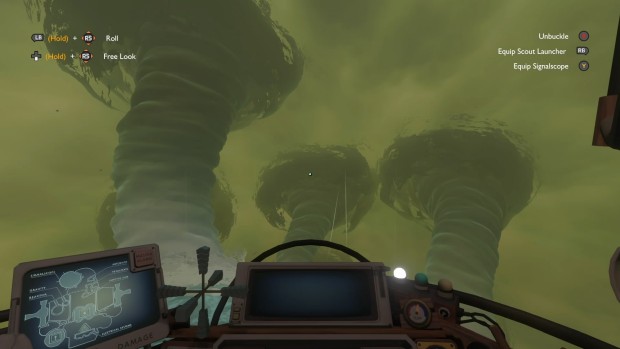
Giant's Deep is both gorgeous and terrifying
A Mystery Worth Exploring
But none of this would matter if the mystery itself wasn't compelling. And the genius of Outer Wilds is that it hands you the 'What' almost immediately, but keeps the 'Why' just out of reach. It's like waking up at 1 AM to find your cat sprinting across the room at Mach 10. Something exciting is clearly happening, but you'll need to do at least a couple of loops to figure out what broke.
And as you uncover the history of the Nomai - the people that lived here many moons ago - the narrative evolves from a simple scavenger hunt into this massive, interconnected web of twists and turns. It's a deceptively simple story that somehow manages to land an existential gut-punch by the time the credits roll. I'd love to talk about the true ending here, but I won't. That's a 'once-in-a-lifetime' experience you deserve to have for yourself.
What I can talk about is how the time loop isn't just a gimmick - everything fits together like clockwork. Both time and location are variables you have to plan for. It's the kind of design that leads to those sudden, lightning-bolt moments where the pieces finally click and you go 'OH, I GET IT!' at 2 in the morning. When you solve a puzzle like that, purely through your own intuition, you get that incredibly specific dopamine hit of acing an exam you never even studied for. It's... magical.
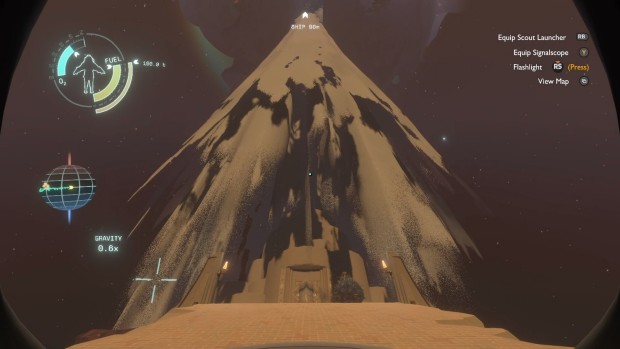
You can't go 2 minutes without seeing something crazy
Try Spinning, It's a Good Trick
Where the magic fades a little is in the movement. At least, when you're on foot.
When you're in your ship - which, I'll remind you, is essentially a wooden shed bolted to a jet engine - zooming around feels incredible. Outer Wilds leans heavily into real physics, so your movement is all about momentum. So if you're screaming toward a planet at 500 meters per second, you better start blasting in the opposite direction a lot sooner than you think... unless you're a fan of using rocks as natural brakes like my neighbor does. (And that's sadly not a joke).
It takes a few loops to master the drifting, but once you're bouncing around at high speed and avoiding death by inches, you truly start to feel like a master pilot. The problem arises when you step out of the cockpit.
Once you're on a spacewalk, that momentum-based movement turns precision into a distant, blurry dream. Slipping, sliding, and spinning out of control while trying to enter a simple doorway is hilarious the first few times, but the joke wears thin once you've glued yourself to the wrong wall for the tenth time in a row.
Is this a dealbreaker? Not at all, but I'd happily sacrifice a sliver of realism for a character that can use doors properly. I'm sure my character would agree... if he wasn't horribly concussed after checking the structural integrity of a space station with his forehead.
Those are not happy numbers!
It's a Small World
Part of what makes the world-building so effective is just how... weird it is. You aren't dealing with generic, procedural rocks floating in an endless void. The planets are all miniaturized - so small you can circumnavigate their equator in under thirty seconds - which gives the solar system a very dense, 'toy box' sort of atmosphere.
But what these worlds lack in scale, they make up for in sheer creativity. Every planet follows its own set of rules. Sometimes the lesson is simple: 'Please, for the love of God, do not fall into the black hole! Other times, it's a race against the clock, requiring you to navigate a landscape that is physically falling apart in real-time.
The most surprising part, however, is the Nomai civilization. Despite being three-eyed aliens who played it fast and loose with the concept of reality, the Nomai feel incredibly 'human.'
They aren't monolithic builders of yore - they are just normal people. Their messages aren't about grand prophecies or massive secrets, but just scientists chit-chatting, teasing each other about mistakes, and worrying about family.
It's a simple thing, but it turns your journey from a standard archaeological dig into something... much more personal. So by the time you piece together their fate, it really doesn't feel like you're just reading a history book. It's so much more than that.
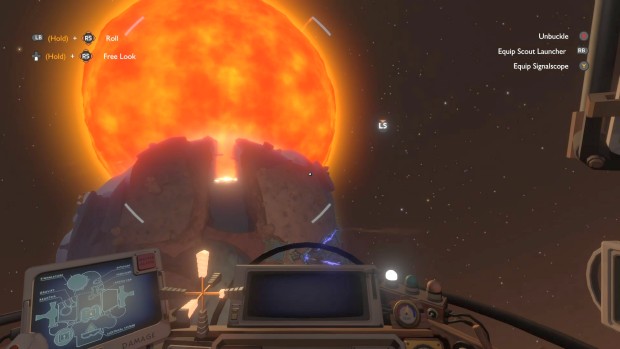
Even the sun is adorably tiny
Good Vibes
That passion is present from the second you open your four eyes. Usually, a tutorial is just the 'boring part' you have to slog through, but the museum on Timber Hearth is different. It's a library of secrets hiding in plain sight, packed with details that you won't truly appreciate until twenty hours later.
The visuals and atmosphere also play a pretty big part in that, managing to be simultaneously foreboding, mysterious, and - strangely enough - incredibly chill. You'd expect your fellow explorers to be terrified that they're stranded in the middle of nowhere, but nope. Instead, you find them jamming out on their instruments like there isn't a world-devouring explosion on the horizon.
I really like this direction because it leans into that 'Star Trek' style of exploration: discovery purely for the joy of it. And how could they not when everything is wrapped in a vivid, colorful art style that breathes life into every location. Even a random, jagged asteroid - something that could've been just a boring hunk of rock - is treated with enough care and visual flair to make it feel like the coolest thing in the cosmos... because it's made out of ice!
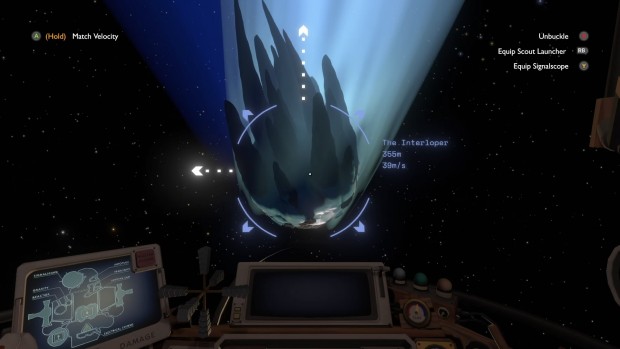
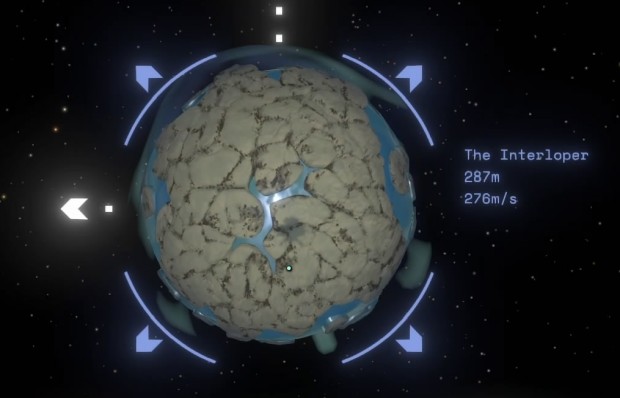
The Interloper really is a cool comet
A Secret Horror Game
But don't let the marshmallows and banjos fool you. There is an undercurrent of genuine horror here. It triggers that same thalassophobia you'd find in Subnautica. You are a tiny, insignificant speck crawling over the ruins of a universe so vast and indifferent that it's hard to even wrap your mind around it.
Trying to perform death-defying jumps over a black hole that's always pulling you down is enough to make your stomach drop. It doesn't help that the whole planet is a ticking time bomb where the ground beneath your feet is constantly being yanked out of existence. Watching a massive section of the city you were just standing on get slurped up like a piece of cosmic spaghetti is... unsettling.
But the real nightmare? That's easily Dark Bramble. I won't spoil the specific brand of hell that resides in that planet because I want you to suffer just as I did. But what I will say is that navigating that fog-choked, labyrinthine mess never once felt comfortable.
And you know what? I genuinely appreciate how much of a visceral reaction Outer Wilds got out of me. It proves that I wasn't just 'playing a game' - I was actually invested in both the world and my character.
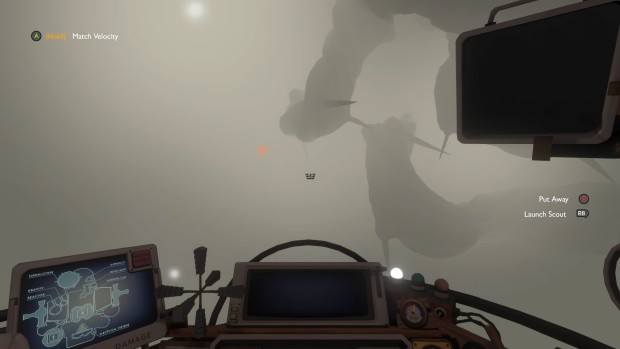
Dark Bramble is the absolute worst... but I kind of love it
Is Outer Wilds Worth Playing?
So... seven years later, is Outer Wilds still worth your time? Well, if you have even a shred of curiosity left in your soul, the answer is a resounding yes. It is clever, it is charming, and it provides a constant, addictive chain of epiphanies that you simply won't find anywhere else.
The real tragedy of Outer Wilds is that it's a game you can only truly play once. Because the only thing standing between you and the credits is your own ignorance - and once that genie is out of the bottle, you can never put it back. So if you decide to dive in, don't look up any hints or guides. Just do things at your own pace. It'll be one hell of a journey. Trust me on that!